The 9-state invoice lifecycle
Draft to uncollectible: modelling every state your cash can be in, and who needs to act.
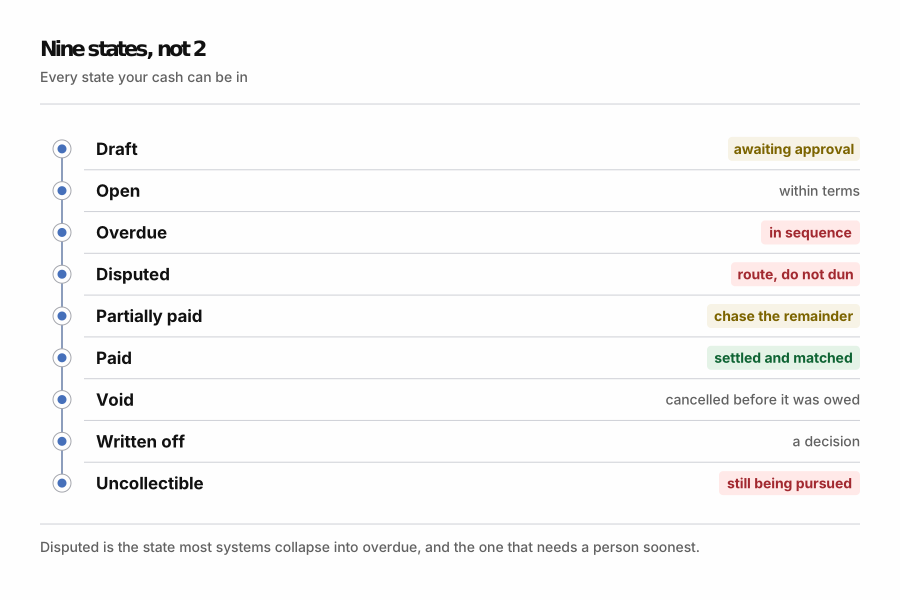
Most systems model an invoice as paid or unpaid. That is 2 states for a process that routinely has 9, and the missing 7 are where cash goes quiet.
The 9
- Draft, generated, awaiting approval
- Open, sent, within terms
- Overdue, past due, in sequence
- Disputed, the customer has raised a question
- Partially paid, some cash landed, the balance did not
- Paid, settled and matched
- Void, cancelled before it was owed
- Written off, a decision, not an accident
- Uncollectible, pending write-off, still being pursued
Disputed is the state most systems collapse into "overdue", and it is the one that needs a person soonest.
Modelling the states separately is what lets the follow-up be correct. You do not dun a disputed invoice; you route it. You do not treat partially paid as unpaid; you chase the remainder with the right number in the email.
See it in the product: CollectionsReminders go out the day after an invoice falls due, once you turn on the Collections agent.
Related
Keep reading
Credit-based pricing explained: why credits are a bridge, not the destination
Credit-based pricing is everywhere in AI billing right now, but it's a transitional model, not an endpoint. Here's how credits work, why they confuse buyers, and what comes after.
Anubhav DubeyClosing the month on the first
Why a close takes 9 days, and which of them are just arithmetic waiting to happen.
Anubhav DubeyThe close is a pipeline problem, not a people problem
Nine-day closes are not caused by slow accountants. They are caused by 5 tools that each hold a different version of the truth.
Anubhav Dubey