Closing the month on the first
Why a close takes 9 days, and which of them are just arithmetic waiting to happen.
A 9-day close is rarely 9 days of judgement. It is usually 2 days of judgement wrapped around 7 days of moving numbers between systems that disagree, and then reconciling the disagreement. The judgement is the part worth paying a controller for; the rest is arithmetic waiting to be automated.
Where the days go
Instrument a close and the same 4 costs appear. Each is a symptom of the same cause: the billing system and the ledger hold separate copies of the same facts.
- Waiting for the billing run to finish so revenue can be recognised against it.
- Re-keying or importing invoices into the ledger, then reconciling what did not match.
- Rebuilding the deferred-revenue roll-forward because last period's closing balance was adjusted.
- Chasing the one variance that nobody can explain until someone opens the contract.
Compute before the period ends
Recognition schedules, deferred balances and journal entries do not need the period to be over. They need the contract and the delivery signals, and both exist from the day the contract is signed. Computed continuously, closing becomes a review of numbers that are already there rather than a rebuild of numbers that are not.
See it in the product: Revenue recognitionASC 606 schedules and journal entries built from the contract, without the spreadsheet.
What the auditor reads
The shortest close is worthless if it cannot be defended. Every state change is recorded and replayable, and every journal entry traces to the contract line that produced it, so the trail that makes the close fast is the same trail the auditor asks for.
Related
Keep reading
Usage metering 101: build vs. buy the infrastructure behind accurate billing
Usage metering is the foundation every usage-based billing model depends on. See how metering pipelines work, the real cost of building your own, and when to buy instead.
Anubhav Dubey
Credit-based pricing explained: why credits are a bridge, not the destination
Credit-based pricing is everywhere in AI billing right now, but it's a transitional model, not an endpoint. Here's how credits work, why they confuse buyers, and what comes after.
Anubhav Dubey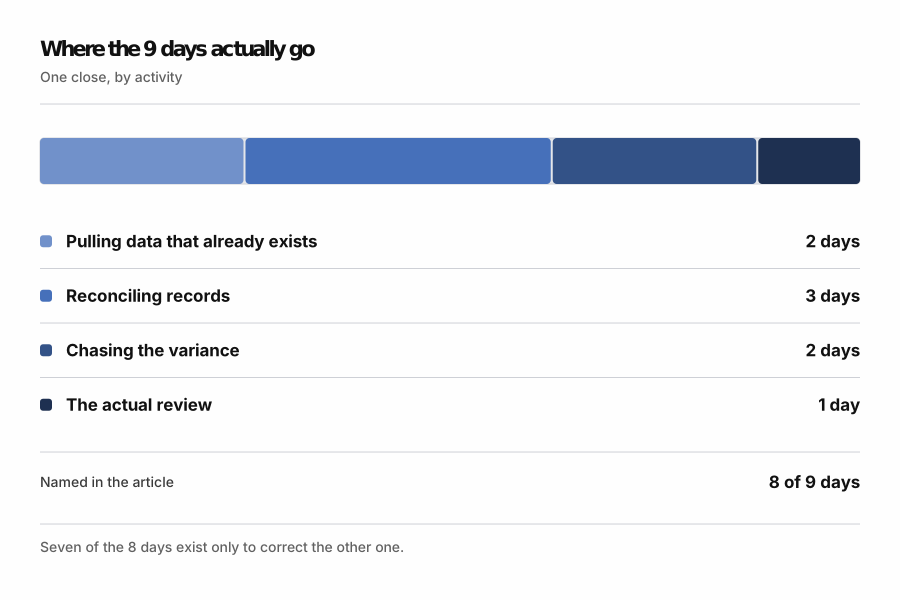
The close is a pipeline problem, not a people problem
Nine-day closes are not caused by slow accountants. They are caused by 5 tools that each hold a different version of the truth.
Anubhav Dubey