What a short per-seat close takes
Per-seat SaaS, annual prepays, constant seat changes, and a trace an auditor can replay.
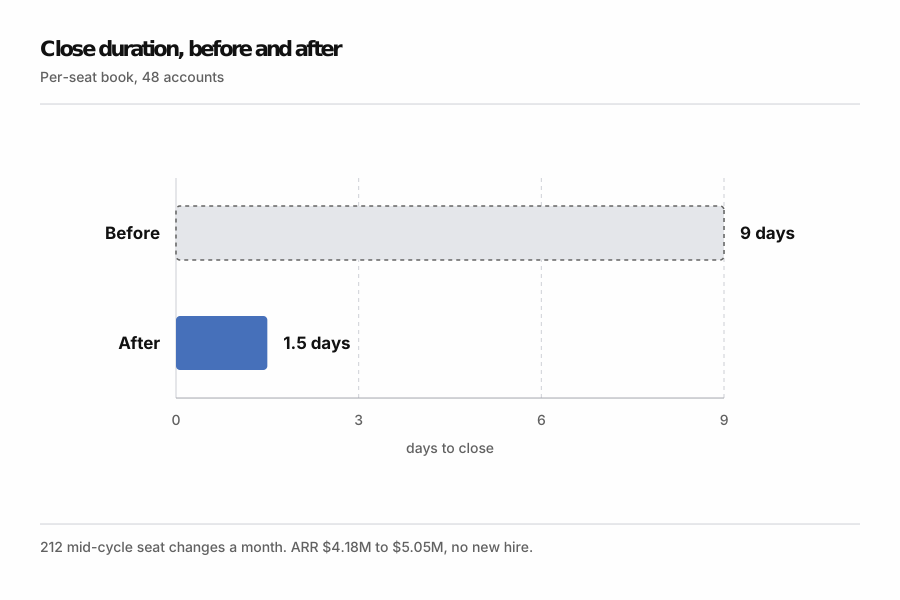
Take a per-seat analytics workspace sold on annual contracts, whose customers change seat counts constantly. That combination is what made the close hard: every mid-cycle change meant a proration, and every proration meant a manual journal entry.
The problem was not volume
Forty-eight accounts is not a lot. But 212 mid-cycle seat changes a month is, when each one is priced by hand and then explained twice, once on the invoice and once in the recognition schedule.
We were not slow. We were doing the same arithmetic in 3 places and hoping it matched.
What changes
- Contracts became the billing schedule, so prorations priced themselves to the day
- Recognition ran off the same contract, not off the invoice
- Journal entries mapped to their existing chart of accounts, as a file their ledger imports
See it in the product: Revenue recognitionASC 606 schedules and journal entries built from the contract, without the spreadsheet.
The result
The close goes from 9 days to a day and a half, and the audit goes from a reconciliation exercise to a read. The auditor asks what changed; the answer is a replayable trail behind every figure, which is a shorter conversation than a folder of bridge files.
ARR over the same period grows from $4.18M to $5.05M, with no addition to the finance team.
Related
Keep reading
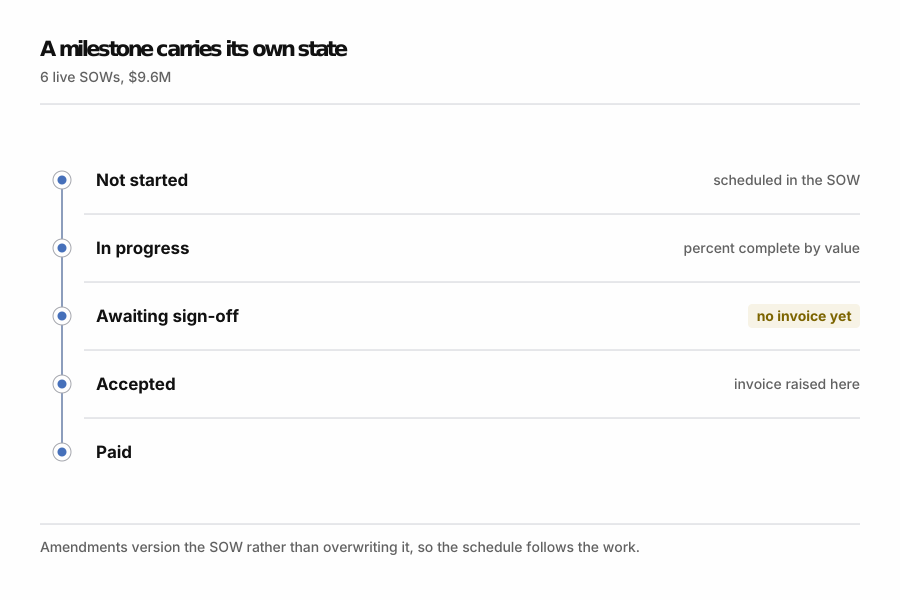
Milestone billing without the spreadsheet
How to run $9.6M of SOWs and their amendments on autopilot.
Anubhav Dubey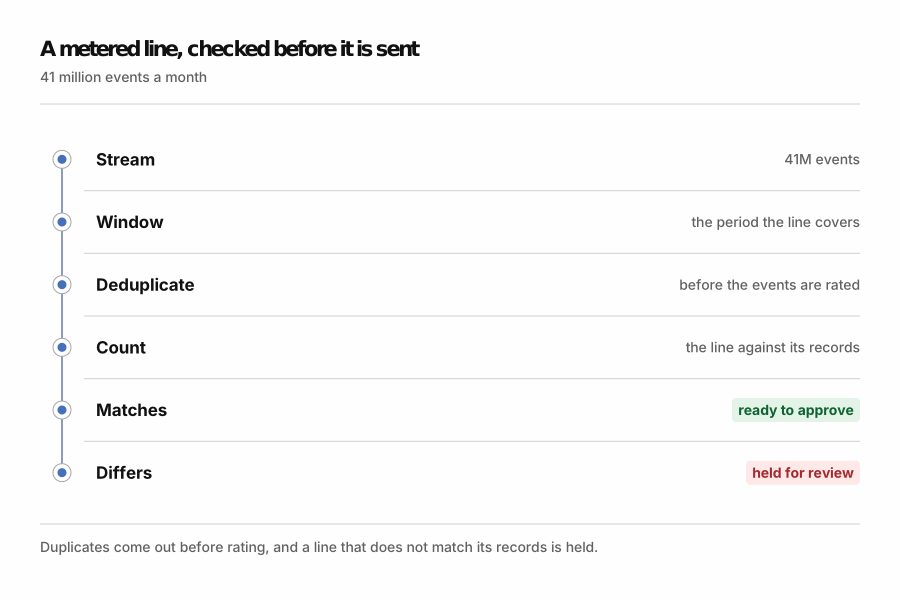
Usage-based billing explained: how it works and why SaaS is switching in 2026
Usage-based billing charges customers for what they actually consume. See how it works, why 38% of SaaS companies now use it, and how to adopt it without breaking finance.
Anubhav Dubey
Hybrid pricing models: how to combine subscription, usage, and credits without confusing buyers
Hybrid pricing now beats pure usage-based or per-seat models in SaaS. Learn the most common hybrid patterns, when to offer customers a choice, and how to avoid pricing-menu overload.
Anubhav Dubey