Milestone billing without the spreadsheet
How to run $9.6M of SOWs and their amendments on autopilot.
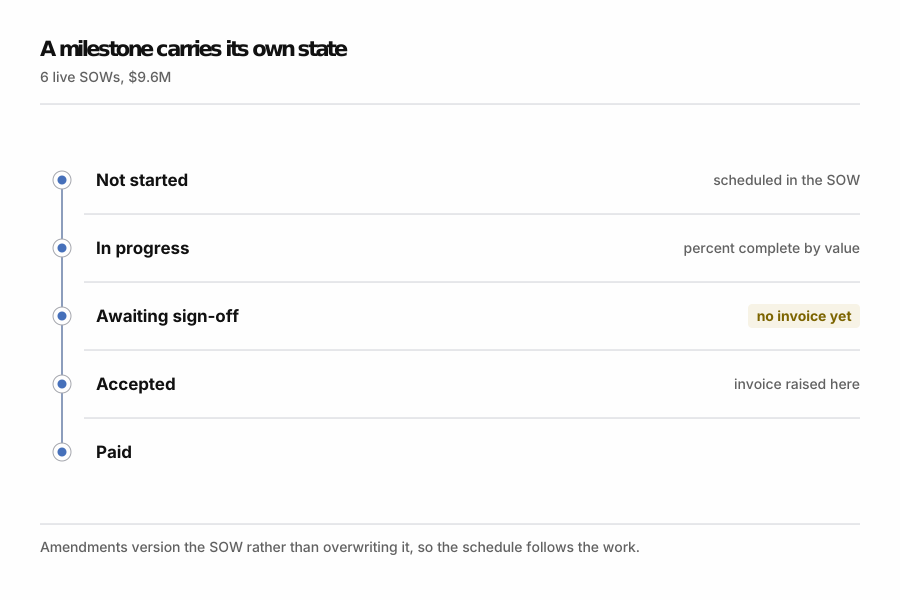
Fixed-fee project work is the revenue model spreadsheets survive longest in, because every engagement looks like an exception. Picture 6 live SOWs worth $9.6M, each with its own milestone schedule and amendments that move the totals mid-flight.
Three things that broke
- Percent-complete revenue recognised off a schedule nobody updated after an amendment
- Amendments tracked in a separate tab and applied from memory
- Invoices raised on the milestone date rather than on client acceptance
The schedule was right the day it was written and drifted every week after.
What replaced it
Milestones now carry their own state, not started, in progress, awaiting sign-off, paid, and the invoice is raised by acceptance, not by calendar. Amendments version the SOW rather than overwriting it, so the recognition schedule follows the work instead of the original plan.
Each acceptance raises its invoice and recognises its revenue in one step, which turned a quarterly reconstruction into a balance that is simply correct.
See it in the product: BillingInvoices built from the signed contract, for seats, usage, credits and milestones.
Related
Keep reading
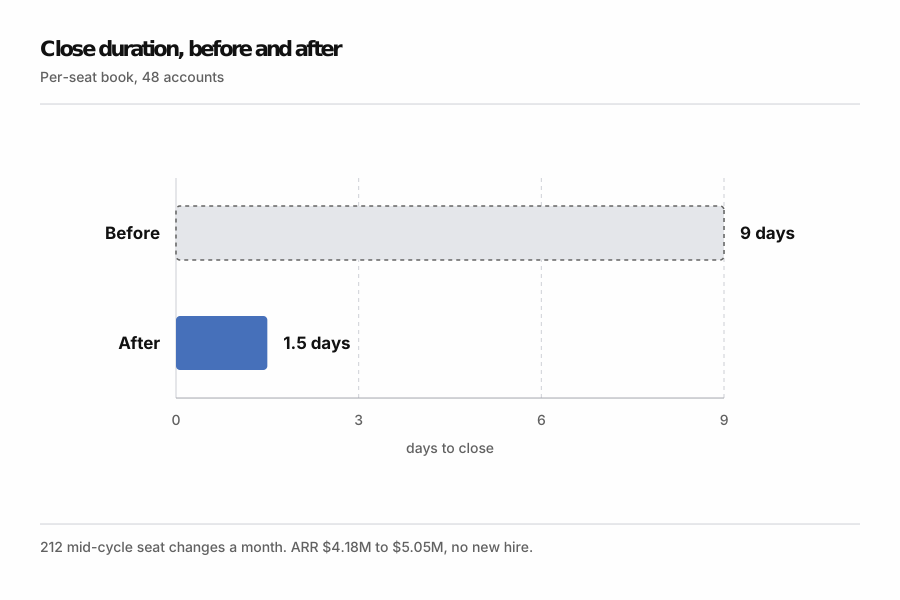
What a short per-seat close takes
Per-seat SaaS, annual prepays, constant seat changes, and a trace an auditor can replay.
Anubhav Dubey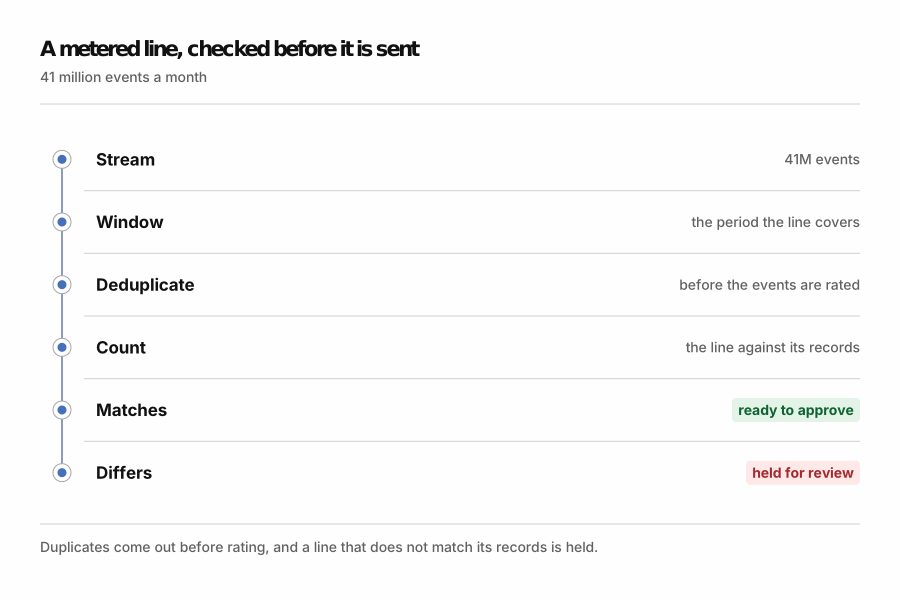
Usage-based billing explained: how it works and why SaaS is switching in 2026
Usage-based billing charges customers for what they actually consume. See how it works, why 38% of SaaS companies now use it, and how to adopt it without breaking finance.
Anubhav Dubey
Hybrid pricing models: how to combine subscription, usage, and credits without confusing buyers
Hybrid pricing now beats pure usage-based or per-seat models in SaaS. Learn the most common hybrid patterns, when to offer customers a choice, and how to avoid pricing-menu overload.
Anubhav Dubey