Your dunning emails are too polite (and too rude)
Tone-matched collections: what 30% more recovered cash actually looks like.
Most dunning sequences have one voice. It is either apologetic for 6 weeks or aggressive from day one, and both leave money on the table.
Lateness and size are different signals
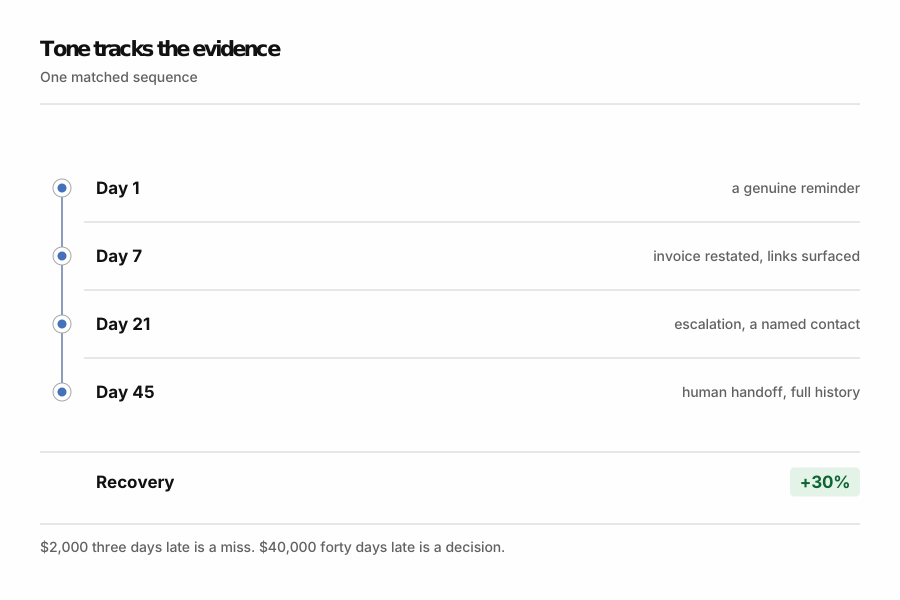
A $2,000 invoice 3 days late is almost always an administrative miss. A $40,000 invoice 40 days late is a decision someone has made. Sending the same email to both is what produces the 2 familiar failures: annoying good customers, and being ignored by the ones who are stalling.
Tone should track the evidence, not the calendar alone.
What a matched sequence looks like
- Day 1, a genuine reminder, assuming the miss was accidental
- Day 7, a second notice with the invoice restated and payment links surfaced
- Day 21, escalation, a named contact and a call task raised
- Day 45, human handoff, with the full history attached
Recovery went up 30% the month this went live, and the increase came almost entirely from the middle of the sequence, the accounts that were neither forgetful nor unwilling, just unprompted.
See it in the product: CollectionsReminders go out the day after an invoice falls due, once you turn on the Collections agent.
Related
Keep reading
Usage metering 101: build vs. buy the infrastructure behind accurate billing
Usage metering is the foundation every usage-based billing model depends on. See how metering pipelines work, the real cost of building your own, and when to buy instead.
Anubhav DubeyCredit-based pricing explained: why credits are a bridge, not the destination
Credit-based pricing is everywhere in AI billing right now, but it's a transitional model, not an endpoint. Here's how credits work, why they confuse buyers, and what comes after.
Anubhav DubeyClosing the month on the first
Why a close takes 9 days, and which of them are just arithmetic waiting to happen.
Anubhav Dubey