ASC 606 for hybrid contracts, in plain words
Performance obligations, SSP allocation and deferred revenue, without the audit-speak.
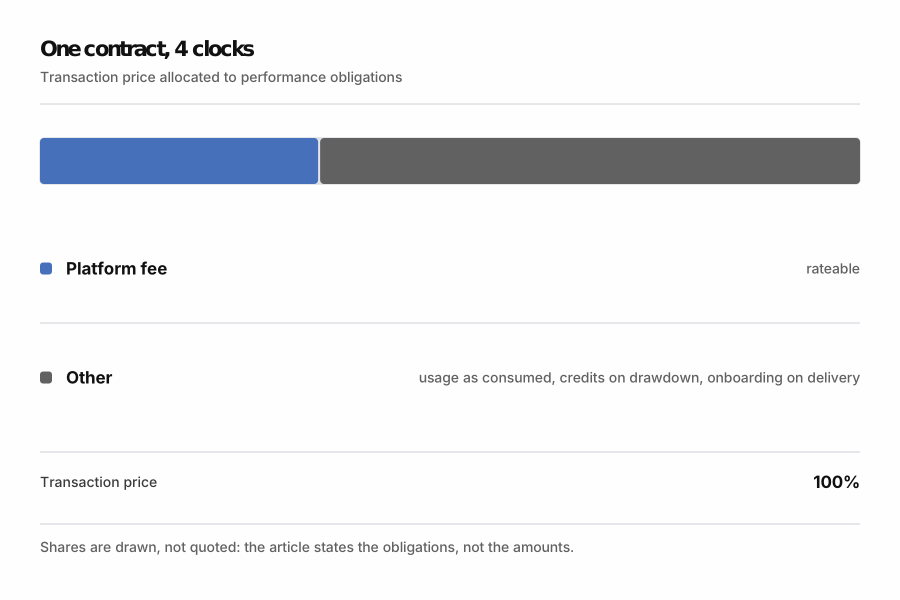
ASC 606 is 5 steps, and 4 of them are easy. The hard one is allocation, and it gets harder the moment a contract contains more than one kind of thing.
The 5 steps, briefly
- Identify the contract
- Identify the performance obligations in it
- Determine the transaction price
- Allocate that price to the obligations
- Recognise revenue as each obligation is satisfied
Where hybrid contracts bite
A contract with a platform fee, metered usage, a block of prepaid credits and an onboarding engagement contains at least 4 obligations that are satisfied on 4 different schedules. The platform fee is rateable. Usage is recognised as consumed. Credits are recognised on drawdown, with breakage estimated. Onboarding is recognised on delivery.
One contract, 4 clocks. The allocation is what keeps them honest.
See it in the product: Revenue recognitionASC 606 schedules and journal entries built from the contract, without the spreadsheet.
Standalone selling price without the guesswork
SSP is where most teams improvise. If you sell the component separately, you have observable evidence and should use it. If you do not, you need a defensible estimate, usually an adjusted market assessment or expected cost plus margin, and, critically, the same method applied consistently across similar contracts.
Whatever method you pick, write down why. The judgement is acceptable; the absence of a stated basis is what your auditor will push on.
Related
Keep reading
Usage-based billing explained: how it works and why SaaS is switching in 2026
Usage-based billing charges customers for what they actually consume. See how it works, why 38% of SaaS companies now use it, and how to adopt it without breaking finance.
Anubhav Dubey
Hybrid pricing models: how to combine subscription, usage, and credits without confusing buyers
Hybrid pricing now beats pure usage-based or per-seat models in SaaS. Learn the most common hybrid patterns, when to offer customers a choice, and how to avoid pricing-menu overload.
Anubhav Dubey
AI token-based pricing: a practical guide to billing AI products and agents in 2026
Token-based pricing is now the default for AI products, but it breaks traditional billing and forecasting. Here's how token billing works, why costs are opaque, and how to price AI without losing margin.
Anubhav Dubey